

How to Interact and Teach a Preschool Child
- Home
- How to Interact and Teach a Preschool Child
Introduction
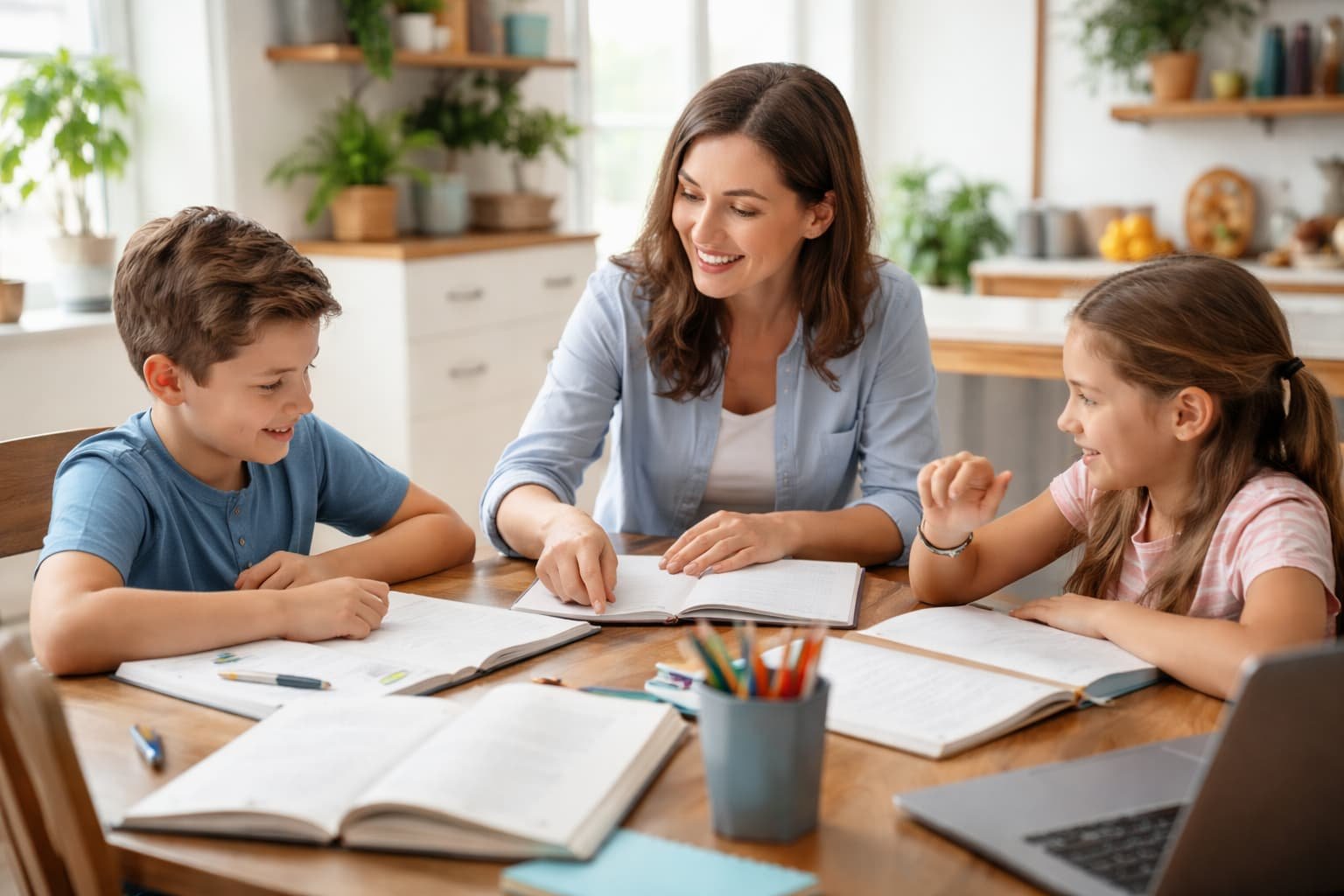
The preschool years are a remarkable time in a child’s life. From ages 3 to 5, children are growing rapidly in language, social skills, imagination, and early problem-solving. For homeschooling parents, this is not the time for rigid academics, but for building a strong foundation through connection, routine, play, and gentle guidance. Teaching a preschool child works best when you focus on the relationship first and instruction second. Young children learn most effectively when they feel safe, engaged, and free to explore their world with support from a responsive adult.
Preschool Age
Preschool age usually includes children from 3 to 5 years old. At this stage, children are becoming more independent, asking constant questions, and learning to express needs and emotions more clearly. They are also developing fine and gross motor skills, early language, memory, and the ability to follow simple directions. This is an important period for homeschooling families or any family, as children at this age are naturally eager to learn. Their curiosity gives parents many opportunities to teach basic concepts through daily life, storytelling, songs, games, and hands-on activities.
Brain Development
A preschool child’s brain is developing at a very fast pace. Experiences, repetition, conversation, and play all help strengthen neural connections, which support later learning. The experiences you provide at home do more than entertain your child; they actively shape how the brain organizes information and solves problems. Warm interaction matters as much as academic content. Children learn best when adults respond to their questions, notice their efforts, and create a calm and encouraging environment. Playful learning and guided play are especially valuable because they combine joy with intentional skill-building.
Levels of Cognition
Preschoolers are in Piaget’s preoperational stage of cognitive development, which generally lasts from about age 2 to 7. During this stage, children begin to think symbolically, use language more skillfully, and enjoy pretend play, but their thinking is still mostly intuitive rather than logical. At this level of cognition, children often:
- Focus on one idea at a time.
- Think from their own perspective.
- Understand symbols and pretend objects.
- Struggle with abstract logic and complex cause-and-effect reasoning.
This means preschool teaching should stay concrete, visual, and hands-on. Instead of long explanations, children benefit more from showing, modeling, sorting, moving, singing, and repeating.
How They Learn
Preschoolers learn through movement, conversation, sensory exploration, imitation, repetition, and play. They do not need formal worksheets to make progress. In fact, young children often learn more from meaningful interaction and guided activities than from passive instruction.
- They learn well when they can:
- Touch and manipulate objects.
- Hear language in stories and songs.
- Repeat activities many times.
- Ask questions and receive answers.
- Practice skills in real-life settings.
Play-based learning is especially effective because it supports language, social growth, problem-solving, motor skills, and creativity at the same time.
How to Interact and Teach
The best way to teach a preschool child is to stay connected, calm, and intentional. Your goal is not to lecture, but to guide discovery. When you interact in a warm, responsive way, children are more willing to listen, try, and learn.
- Helpful strategies include: Follow your child’s interests. If they love animals, use animal books, sorting games, and pretend play to teach vocabulary and early counting.
- Use short directions. Preschoolers respond better to simple, one-step instructions.
- Ask open-ended questions. Questions like “What do you think will happen?” encourage thinking and language.
- Model behavior. Children learn by watching how you speak, solve problems, and handle frustration.
- Praise effort, not just results. Encouragement helps build confidence and persistence.
Guided play is one of the most effective teaching tools because it allows the child to lead while the adult adds structure and learning goals. For example, a pretend grocery store can teach counting, sorting, vocabulary, and social skills all at once.
Imparting Early Learning
Early learning should feel natural and joyful. Instead of trying to copy older-grade schooling, focus on simple foundations that prepare the child for later academics. Useful early learning goals include:
- Language development through reading aloud, storytelling, and conversation.
- Early math through counting, patterns, shapes, and comparison.
- Pre-writing skills through drawing, tracing, coloring, and fine-motor play.
- Science learning through observation, nature walks, and simple experiments.
- Social-emotional learning through sharing, turn-taking, role-play, and naming feelings.
A preschool homeschool day can include books, songs, blocks, outdoor play, art, and practical life tasks like putting toys away or helping set the table. These activities build attention, coordination, and responsibility while keeping learning age-appropriate.
Final Takeaway
Homeschooling a preschooler is less about formal instruction and more about shaping a rich learning environment. Children this age thrive when parents offer routine, conversation, play, and hands-on discovery. If you want to help your child grow academically and emotionally, start with connection, keep lessons short, and make learning part of everyday life. That combination gives preschoolers the security and freedom they need to flourish.
Facebook
X Corp
LinkedIn
WhatsApp
Email
Latest Post

August 15, 2026