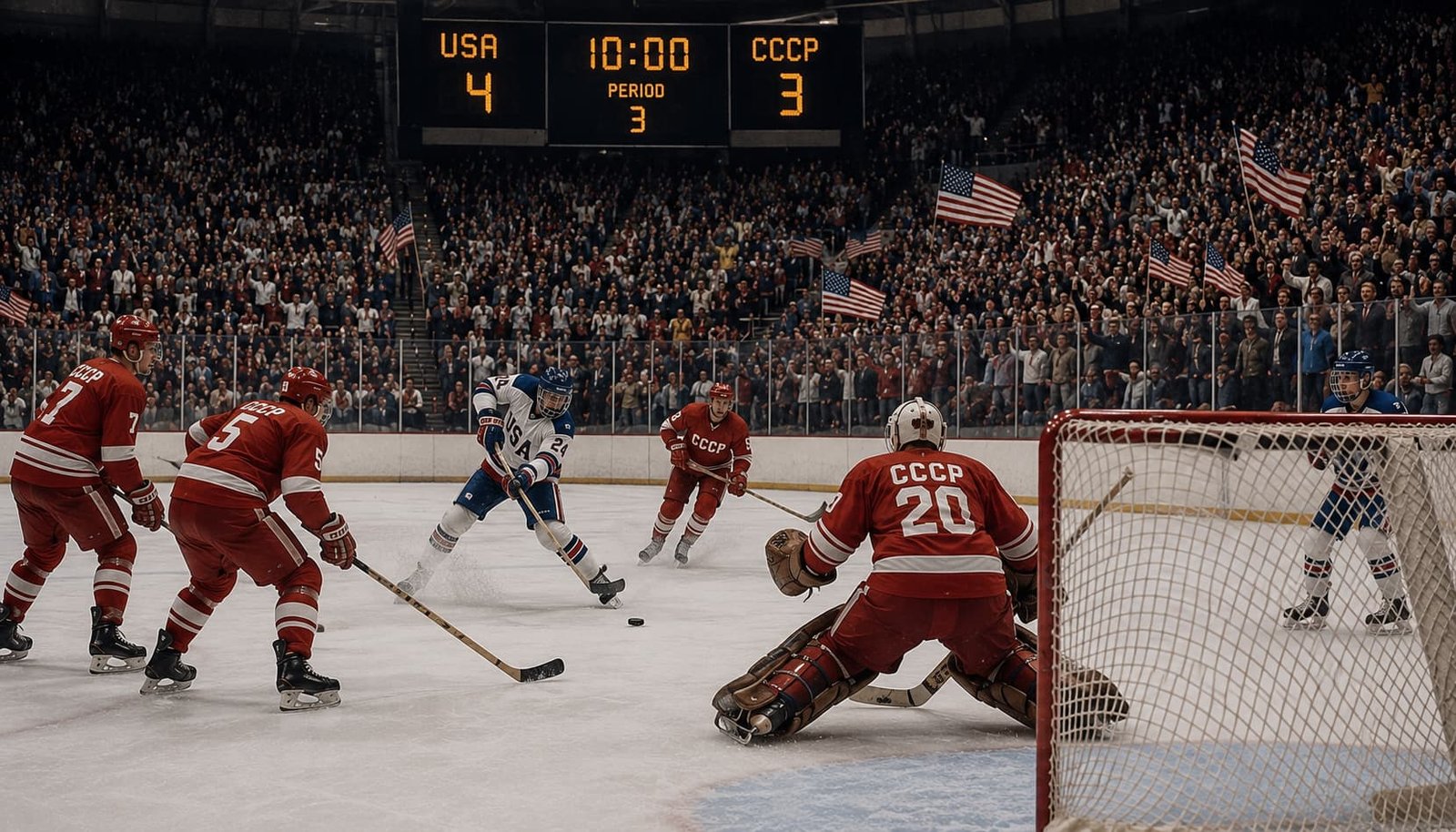
On February 22, 1980, a team of American college kids and amateurs walked onto the ice at Lake Placid to face the Soviet Union, the best hockey team in the world, a squad that had dominated Olympic and international competition for years. On paper, it wasn’t a game. It was a formality. The Soviets were professionals in every way but name. The Americans were students, some of them barely out of college locker rooms. They won anyway. 4-3. And the phrase that came out of it, “Do you believe in miracles?” has outlived the scoreboard by decades, because the game was never really about hockey.
The Setup Was Built for Failure
Everything about that matchup said the American team should lose, and lose badly. The Soviets had beaten NHL All-Stars. They’d beaten this same U.S. team 10-3 in an exhibition game just days before the Olympics. There was no reasonable case for optimism, only stubbornness. That’s worth sitting with. The team didn’t win because the odds were secretly in their favor. They won in spite of the fact that every rational measure said they shouldn’t. That distinction matters, because most of the things worth doing in life don’t come with favorable odds built in. They come with a case against them, and a decision about whether to make the attempt anyway.
Persistence Isn’t a Straight Line
The U.S. team wasn’t ahead for most of that game. They fell behind. They tied it up. They fell behind again. The story isn’t one of dominance; it’s one of a team that kept absorbing setbacks without deciding the setbacks meant it was over. That’s closer to how persistence actually works than the highlight-reel version usually suggests. Progress rarely moves in one direction. Most worthwhile efforts involve falling behind more than once, and the difference between the people who eventually succeed and the people who don’t often isn’t talent or luck; it’s whether they treated a setback as information or as a verdict.
Belief Doesn’t Require Certainty
Herb Brooks, the U.S. coach, didn’t get his team to believe they were guaranteed to win. He got them to believe they had a chance, and that a chance was enough to justify everything they were about to give. That’s a subtler kind of belief than confidence; it doesn’t require certainty, just enough conviction to keep trying instead of conceding in advance. That’s usually the more honest version of belief anyway. Rarely do we know something will work out before we do it. What we can control is whether we show up fully for the attempt, regardless of the odds.
The Lesson Outlasts the Game
More than four decades later, “Miracle on Ice” isn’t remembered because of hockey strategy. It’s remembered because it’s one of the clearest examples we have of a group of people refusing to accept that the outcome was already decided. It’s cited in boardrooms, classrooms, and locker rooms that have nothing to do with the sport, because the core of it translates to nearly anything hard:
- The odds being against you isn’t the same as the outcome being decided.
- Falling behind isn’t the same as losing.
- Belief doesn’t require certainty; it just requires enough conviction to keep going.
Whatever the equivalent of the Soviet team is in your own life, the challenge that looks unbeatable on paper, the goal that seems unreasonable to chase, the lesson from that ice in 1980 isn’t that you’re guaranteed to win. It’s that giving up early guarantees you won’t, and trying anyway is the only path where a different outcome is even possible.
Do you believe in miracles? Maybe the better question is whether you’re willing to keep playing long enough to find out.