
Insects Are Not Just Critters: Why the Smallest Animals Deserve the Most Attention
- Home
- Insects Are Not Just Critters: Why the Smallest Animals Deserve the Most Attention
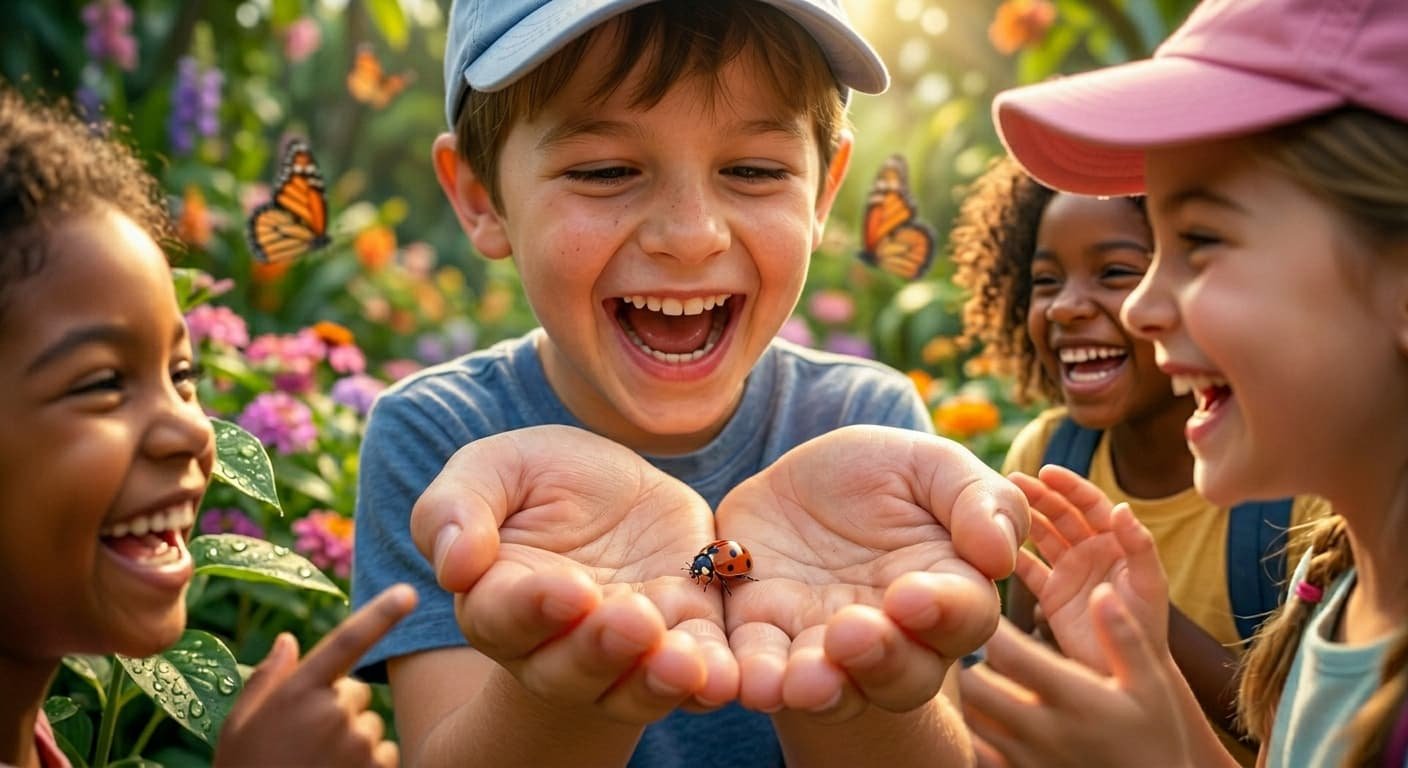
Ask most kids what they think of insects, and you’ll get one of two reactions: “eww” or “cool.” Rarely anything in between. But insects are the most successful animal group on the planet, with more species of insects existing than every other animal group combined, and dismissing them as “just bugs” means missing one of the best subjects for building real curiosity in kids.
Not All Insects Are “Bugs”
Here’s a fact that trips up even adults: not every insect is a “bug.” In everyday language, “bug” gets used for anything small and crawly — spiders, worms, even pill bugs. But scientifically, a “true bug” is a specific insect order (Hemiptera) that includes things like stink bugs, cicadas, and aphids, all of which have a distinct piercing-sucking mouthpart.
Meanwhile:
- Spiders aren’t insects at all; they’re arachnids, with eight legs instead of six and two body segments instead of three.
- Centipedes and millipedes aren’t insects either; they belong to their own separate group entirely.
- Beetles, ants, bees, and butterflies are insects, but none of them are “true bugs” in the scientific sense.
Teaching kids this one distinction, insect vs. bug vs. “not even close,” is a small thing that builds a big habit: noticing that everyday words and scientific words don’t always mean the same thing.
Why Insects Matter Economically
Insects aren’t just background noise in nature; they run entire sectors of the economy.
- Pollination: Roughly one out of every three bites of food humans eat exists because a pollinator- mostly bees, but also butterflies, moths, and even some flies and beetles — visited a flower first. Almonds, apples, coffee, and chocolate all depend on it.
- Pest control: Ladybugs (they are not bugs but are beetles by the way!) alone can eat thousands of aphids in a lifetime, which is why farmers release them instead of reaching for pesticides.
- Silk, honey, and dye: Silkworms, honeybees, and even certain scale insects (used historically to make red dye) have shaped entire industries.
- Decomposition and soil health: Insects break down dead plant and animal matter, cycling nutrients back into soil that crops depend on.
Kids who understand this start to see a bee in the backyard differently, not as a threat to swat away, but as an employee of the entire food system.
Why Insects Matter Ecologically
Beyond the economy, insects are the foundation of nearly every food web on land.
- They’re the primary food source for birds, amphibians, fish, and small mammals; remove insects, and those populations collapse.
- They aerate soil and recycle nutrients, functioning as some of nature’s most efficient recyclers.
- They indicate ecosystem health; scientists monitor insect populations (especially aquatic insects like mayflies) as an early warning system for pollution or environmental damage.
This is a great “why does this matter” conversation to have with kids: insects are small enough to overlook, but pull them out of an ecosystem and the whole system notices immediately.
Learning to Identify the Common Ones
Kids don’t need an entomology degree to start noticing the insect world around them. A few easy ones to start with:
- Ladybugs: round, red or orange, black spots, harmless and beneficial
- Honeybees vs. wasps: bees are fuzzy and rounder; wasps are smooth, shiny, and narrow-waisted
- Ants: three body segments, elbowed antennae, almost always in a visible trail
- Dragonflies: two pairs of wings held out flat, often near water
- Monarch butterflies: orange and black wings, easy to spot during migration season
Turning a backyard walk into an “I Spy” for insects builds observation skills fast, and it’s a habit that pairs perfectly with quiz-style learning, where a kid gets to test what they’ve noticed against a real fact. Of course, do everything with an adult’s supervision.
Appreciating the Beauty, Not Just the Utility
It’s easy to justify insects purely by their usefulness: pollination, pest control, food chains. But there’s a simpler case to make too: insects are genuinely beautiful, in a way that rewards close attention.
- A dragonfly’s wings are nearly transparent and iridescent up close.
- A butterfly’s wing pattern is symmetrical down to the smallest detail.
- A beetle’s shell can shimmer with colors that shift depending on the angle of light.
Kids who are taught to find insects gross rarely get the chance to notice this. Kids who are taught to look closely often do.
Turning Curiosity into a Habit
This is exactly the gap PowerQuiz Insect World is built for! Instead of a lecture about pollinators or a worksheet on insect anatomy, it’s a set of trivia questions that turn “ew, a bug” into “wait, how does that work?” — the kind of question that sticks because a kid asked it themselves. A few to try this week:
- How many legs does an insect have, and how is that different from a spider?
- Why do ladybugs matter to farmers?
- What’s the difference between a moth and a butterfly?
If your kid can already answer two of the three, they’re further along than most adults.
PowerQuiz Insect World is part of the PowerQuiz trivia card series, turning small curiosities into big learning, one question at a time.
Facebook
X Corp
LinkedIn
WhatsApp
Email
Latest Post


August 15, 2026