Every parent knows the phase. It usually starts around age three or four: a sudden, all-consuming obsession with creatures that have been extinct for many, many years. Kids who can’t remember to put on socks can rattle off “Tyrannosaurus rex,” “Pachycephalosaurus,” and “Parasaurolophus” without missing a syllable. It looks like a passing fascination. It isn’t— and understanding why says a lot about how kids actually learn.
It’s Not Really About Dinosaurs
Child development researchers have a name for this: kids who develop deep, narrow obsessions (dinosaurs, trains, planets) are said to have an “intense interest.” And it turns out these interests aren’t a detour from learning; they’re one of the best on-ramps to it.
A dinosaur phase quietly teaches:
- Classification: sorting animals by diet (carnivore vs. herbivore), era (Triassic, Jurassic, Cretaceous), or family (theropods vs. sauropods)
- Scale and size reasoning: comparing a Brachiosaurus to a school bus, or an Argentinosaurus to a building
- Scientific vocabulary: most 4-year-olds can pronounce words that would stump a fifth grader
- Evidence and inference: fossils are incomplete, so scientists have to reason from partial data, which is a genuinely sophisticated skill dressed up in a fun topic
Kids don’t experience any of this as “studying.” They experience it as play. That’s the trick — and it’s exactly why the interest sticks instead of fading like most childhood phases do.
Why the Obsession Runs So Deep
Three things make dinosaurs uniquely sticky for young brains:
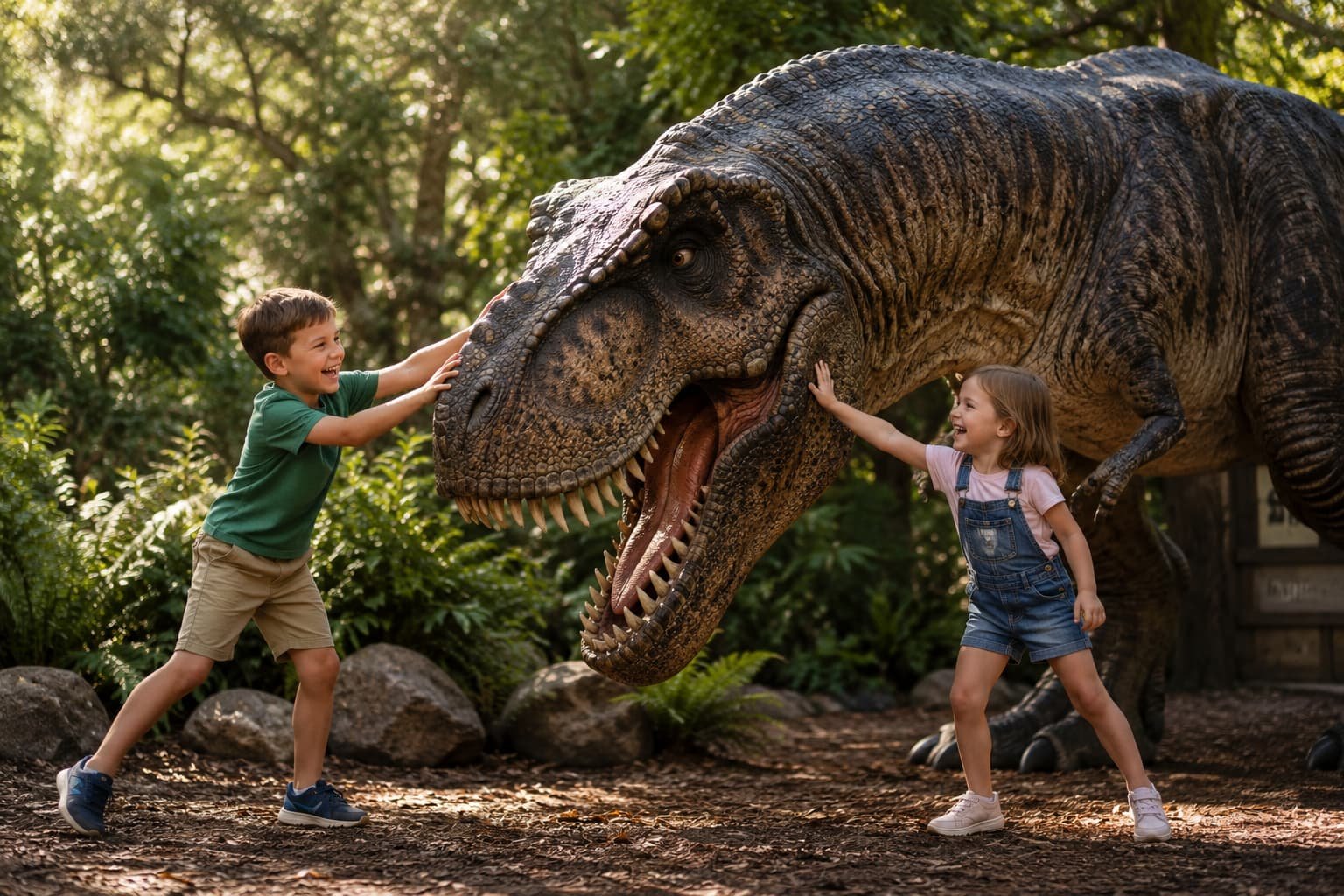
- They’re real, but safely unreachable. Unlike dragons or monsters, dinosaurs actually existed, which makes them fascinating instead of just imaginary. But since they’re extinct, there’s no danger attached. Kids get all the thrill of something enormous and toothy with none of the fear.
- They reward expertise. Dinosaur names are hard. Learning to say them and correcting adults who get them wrong gives kids a rare experience: being the expert in the room. That feeling is a powerful motivator, and it’s one reason dinosaur-obsessed kids keep digging for more facts long after the phase “should” have ended.
- The mystery never fully resolves. New dinosaur species are still being discovered and named every year. Paleontology is one of the few fields where a 6-year-old’s curiosity and a professional scientist’s aren’t that far apart; the questions are still open.
Why the Phase Shouldn’t End
The instinct to steer kids “beyond” dinosaurs and into more grown-up subjects misses the point. The habits a dinosaur obsession builds asking follow-up questions, wanting evidence, comparing and sorting information, tolerating “we don’t know for sure”- are exactly the habits that make kids good learners in every other subject later on. The goal isn’t to move kids past their dinosaur phase. It’s to keep feeding it in ways that build real skills: reading, comparing, questioning, remembering.
Turning the Obsession into a Habit
This is where a game like PowerQuiz Dino World earns its keep. Instead of one more fact dump, it turns dinosaur knowledge into rounds of play, siblings quizzing each other, parents getting stumped by their own kid, a car ride turning into an impromptu trivia round. The facts stick because they’re earned through play, not memorized under pressure. A few questions worth trying at your own dinner table tonight:
- Which dinosaur was actually the size of a chicken?
- What’s the difference between a dinosaur and a “flying reptile” like a pterosaur?
- Which dinosaur had the strongest bite force ever measured?
If your kid answers all three without blinking, that’s not just a fun fact, that’s a kid who’s already learning how to learn. Have fun learning!